
Limited Offer
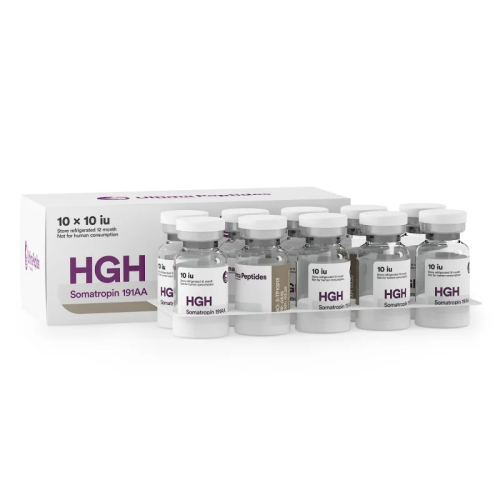
Ultima-HGH Kit 10IU (5 PACK)
$650.00
ACTIVE HALF-LIFE 2.5-3 hours
CLASSIFICATION Peptide Hormone
DOSAGE Men 4-10 IU/day
ACNE No
WATER RETENTION No
HBR No
HEPATOTOXICITY No
AROMATIZATION No
MANUFACTURER Limited Offer
LAB TEST See Document
WAREHOUSE International Warehouse 3
SUBSTANCE Somatropine – 191 Amino Acid ,
Products are being shipped without brand labels for security purposes.
Human Growth Hormone (HGH), also referred to as somatotropin or somatropin, is a peptide hormone that promotes growth, cell reproduction, and regeneration in humans and other animals. It functions as a mitogen, targeting specific types of cells. Growth hormone consists of a single-chain polypeptide comprising 191 amino acids, produced, stored, and released by somatotropic cells in the lateral wings of the anterior pituitary gland. Its release is influenced by several factors, including diet and physical activity.
HGH stimulates body cells to increase in size and accelerate cell division beyond normal rates. It also facilitates the transport of amino acids across cell membranes and enhances the conversion of these molecules into proteins. This leads to an anabolic (muscle-building) effect in the body. Furthermore, HGH can reduce the typical rate at which cells use carbohydrates while boosting the rate of fat utilization. Research has indicated that fat loss and increases in lean mass can occur with doses as low as 0.028 iu/kg daily over 24 weeks. Additionally, it promotes the production of IGF-1.
In a medical context, HGH is used to address growth disorders in children and adult growth hormone deficiency. Studies have consistently shown beneficial effects associated with HGH modulation, including:
- Increased skin thickness and elasticity
- Faster healing and lower infection rates post-trauma or surgery, along with enhanced protein synthesis
- Reduction of sun damage-related wrinkles
- Decreased body fat and promotion of lipolysis
- Increased lean muscle mass
- Enhanced bone mineral density through improved calcium retention and stronger bone mineralization
- Better cholesterol levels
- Reduced LDL (bad) cholesterol and increased HDL (good) cholesterol
- Improved exercise performance
- Shorter recovery times between workouts
- Enhanced renal blood flow
- Better mood, coping abilities, and overall well-being
- Strengthening of joints and ligaments
- Contribution to homeostasis
- Decreased liver absorption of glucose
- Promotion of gluconeogenesis in the liver
- Support for the functionality of pancreatic islets
- Stimulation of the immune system
- Increased conversion of T4 to T3 hormone
Various studies, particularly those focusing on individuals with HGH deficiency, suggest that HGH plays a significant role in mental and emotional health, as well as maintaining high energy levels. Adults with insufficient HGH often experience higher levels of depression compared to those with adequate levels.
Research has also explored HGH’s impact on cognitive functions such as learning and memory. It appears to enhance cognitive capabilities and may benefit individuals with cognitive impairments linked to HGH deficiency.
As an anabolic agent, HGH has been misused by athletes since at least 1982. It is known to produce substantial, quality weight and muscle gains but is less effective for strength improvements. Athletes from the ’70s and particularly in the ’80s exhibited more refined physiques with sculpted muscle development, reminiscent of classical sculptures, suggesting they were not adding extra cardio workouts or significantly increasing their protein intake.
HGH tends to show more pronounced effects and benefits when stacked with steroid cycles compared to its use alone. Therefore, it is generally more suitable for cutting cycles aimed at achieving lean muscle and fat loss.
Reviews
There are no reviews yet.